Professor Omar M. Yaghi, President of the World Cultural Council, was awarded the 2025 Nobel Prize in Chemistry. He is now Xinghua Distinguished Chair Professor in the Department of Chemistry at Tsinghua University in Beijing, where his work joins artificial intelligence, chemistry and the design of new materials.
Professor Yaghi is renowned internationally for founding the field of reticular chemistry, he is a pioneer in the development of metal-organic frameworks (MOFs) and covalent organic frameworks (COFs). His work has created highly porous materials with a range of applications in clean energy, water harvesting, carbon capture and catalysis.
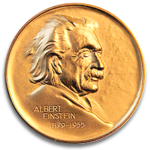
Professor Yaghi, laureate of the 2017 Albert Einstein World Award of Science, has made visionary contributions that have fundamentally transformed materials chemistry and inspired extensive research worldwide. His theoretical and experimental breakthroughs have led to new approaches for addressing global sustainability challenges, thereby rendering invaluable service to humanity.
Beyond his scientific achievements, Professor Yaghi has demonstrated a profound commitment to fostering scientific development and collaboration across nations. He has established research centres in Vietnam, Korea, Japan, Jordan, and Saudi Arabia, providing critical opportunities for young researchers and furthering the progress of science at an international scale.
The World Cultural Council recognizes Professor Yaghi’s exceptional dedication to advancing knowledge, mentoring emerging scholars, and promoting cross-cultural understanding. Under his presidency, the World Cultural Council reaffirms its commitment to honouring individuals and institutions whose achievements contribute significantly to the cultural and scientific progress of humankind.
Photo by Christopher Michel CC-BY-SA-4.0